Text and Causal Inference: A Review of Using Text to Remove Confounding from Causal Estimates
Katherine Keith, David Jensen, Brendan O'Connor
Computational Social Science and Social Media Long Paper
Session 9B: Jul 7
(18:00-19:00 GMT)

Session 10A: Jul 7
(20:00-21:00 GMT)
Abstract:
Many applications of computational social science aim to infer causal conclusions from non-experimental data. Such observational data often contains confounders, variables that influence both potential causes and potential effects. Unmeasured or latent confounders can bias causal estimates, and this has motivated interest in measuring potential confounders from observed text. For example, an individual’s entire history of social media posts or the content of a news article could provide a rich measurement of multiple confounders.Yet, methods and applications for this problem are scattered across different communities and evaluation practices are inconsistent.This review is the first to gather and categorize these examples and provide a guide to data-processing and evaluation decisions. Despite increased attention on adjusting for confounding using text, there are still many open problems, which we highlight in this paper.
You can open the
pre-recorded video
in a separate window.
NOTE: The SlidesLive video may display a random order of the authors.
The correct author list is shown at the top of this webpage.
Similar Papers
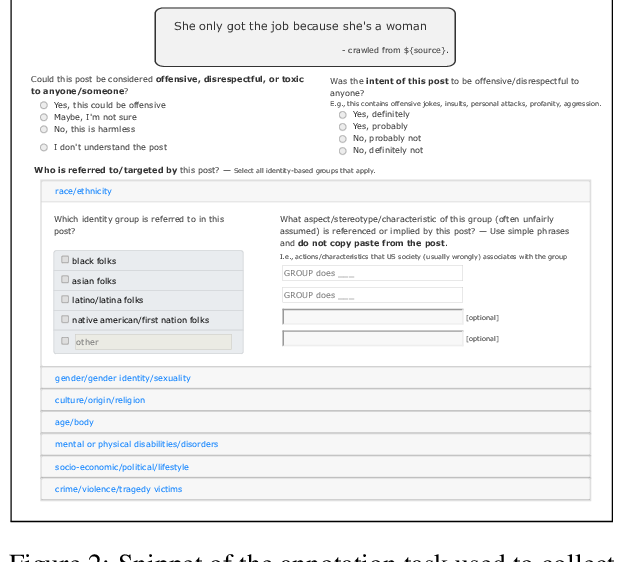
Social Bias Frames: Reasoning about Social and Power Implications of Language
Maarten Sap, Saadia Gabriel, Lianhui Qin, Dan Jurafsky, Noah A. Smith, Yejin Choi,
Dynamic Online Conversation Recommendation
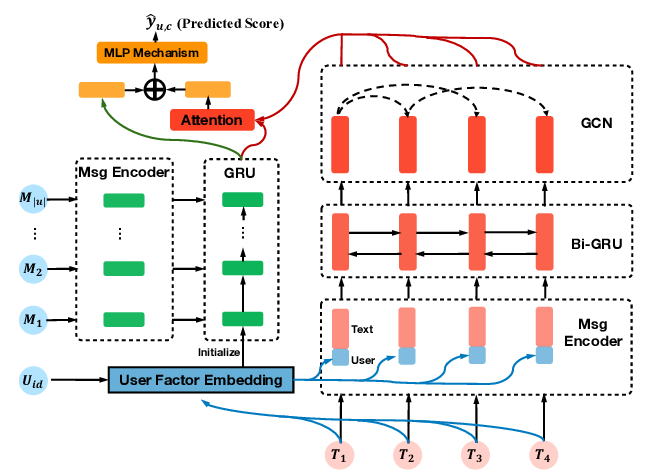
Xingshan Zeng, Jing Li, Lu Wang, Zhiming Mao, Kam-Fai Wong,
Language (Technology) is Power: A Critical Survey of "Bias" in NLP
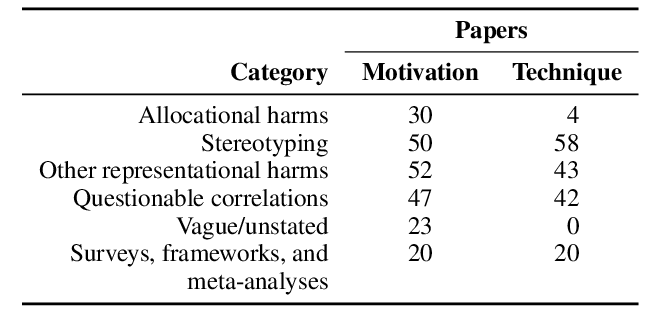
Su Lin Blodgett, Solon Barocas, Hal Daumé III, Hanna Wallach,
Predictive Biases in Natural Language Processing Models: A Conceptual Framework and Overview
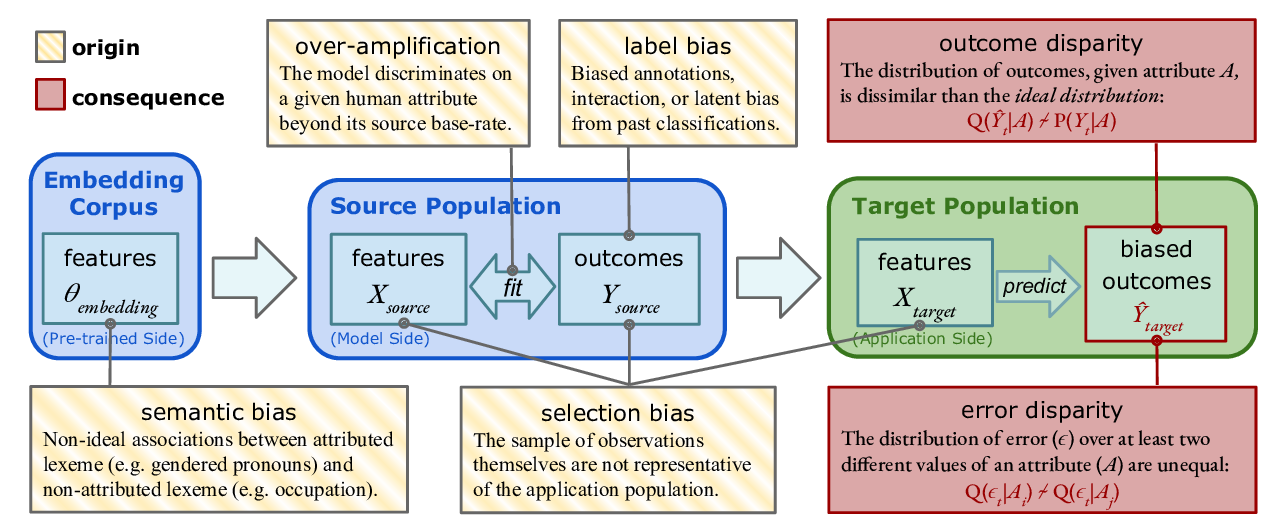
Deven Santosh Shah, H. Andrew Schwartz, Dirk Hovy,