Diversifying Dialogue Generation with Non-Conversational Text
Hui Su, Xiaoyu Shen, Sanqiang Zhao, Zhou Xiao, Pengwei Hu, Randy Zhong, Cheng Niu, Jie Zhou
Dialogue and Interactive Systems Long Paper
Session 12B: Jul 8
(09:00-10:00 GMT)

Session 13B: Jul 8
(13:00-14:00 GMT)
Abstract:
Neural network-based sequence-to-sequence (seq2seq) models strongly suffer from the low-diversity problem when it comes to open-domain dialogue generation. As bland and generic utterances usually dominate the frequency distribution in our daily chitchat, avoiding them to generate more interesting responses requires complex data filtering, sampling techniques or modifying the training objective. In this paper, we propose a new perspective to diversify dialogue generation by leveraging non-conversational text. Compared with bilateral conversations, non-conversational text are easier to obtain, more diverse and cover a much broader range of topics. We collect a large-scale non-conversational corpus from multi sources including forum comments, idioms and book snippets. We further present a training paradigm to effectively incorporate these text via iterative back translation. The resulting model is tested on two conversational datasets from different domains and is shown to produce significantly more diverse responses without sacrificing the relevance with context.
You can open the
pre-recorded video
in a separate window.
NOTE: The SlidesLive video may display a random order of the authors.
The correct author list is shown at the top of this webpage.
Similar Papers
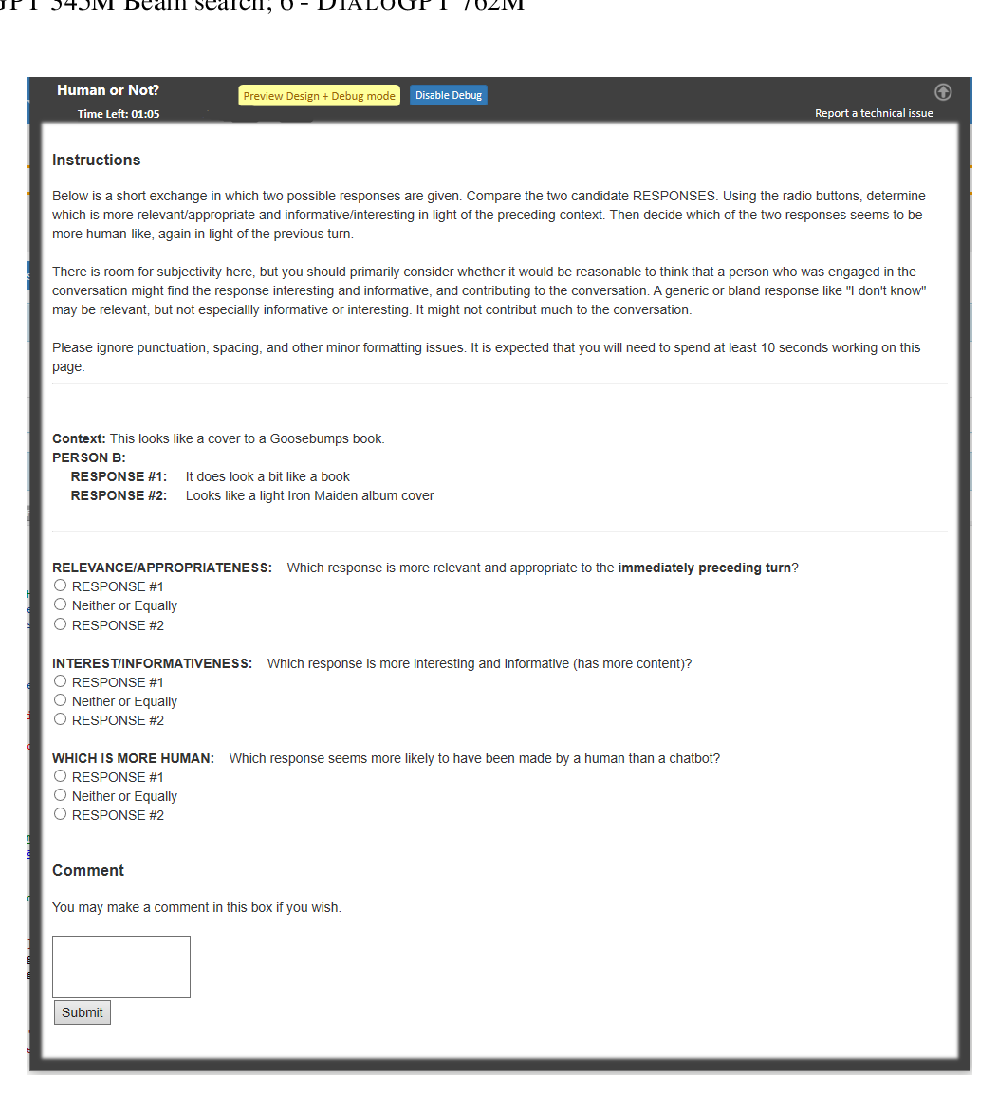
DIALOGPT : Large-Scale Generative Pre-training for Conversational Response Generation
Yizhe Zhang, Siqi Sun, Michel Galley, Yen-Chun Chen, Chris Brockett, Xiang Gao, Jianfeng Gao, Jingjing Liu, Bill Dolan,
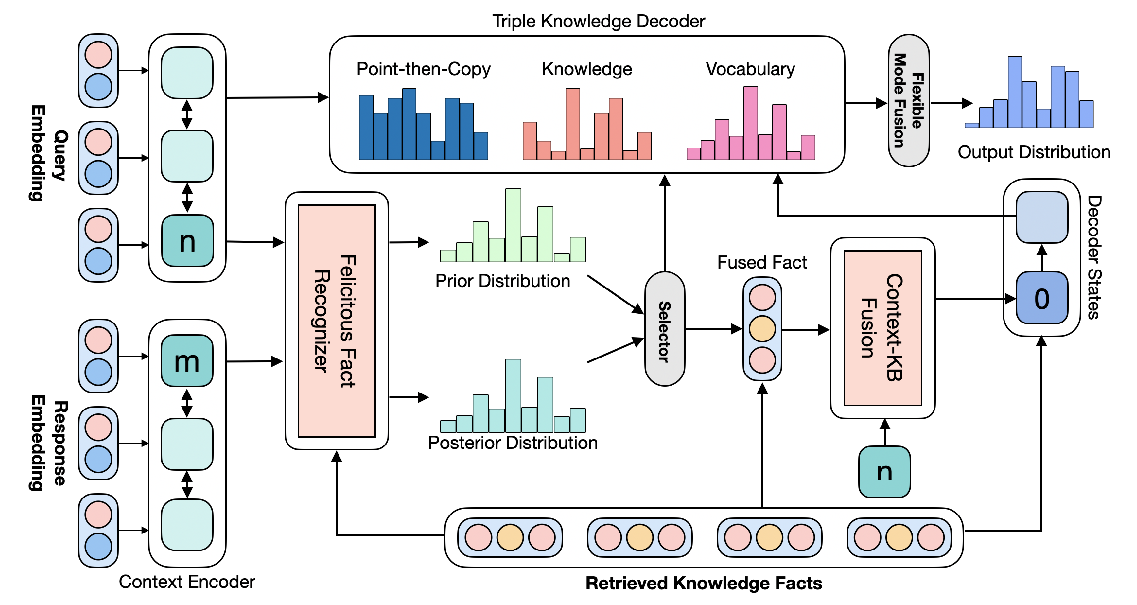
Diverse and Informative Dialogue Generation with Context-Specific Commonsense Knowledge Awareness
Sixing Wu, Ying Li, Dawei Zhang, Yang Zhou, Zhonghai Wu,
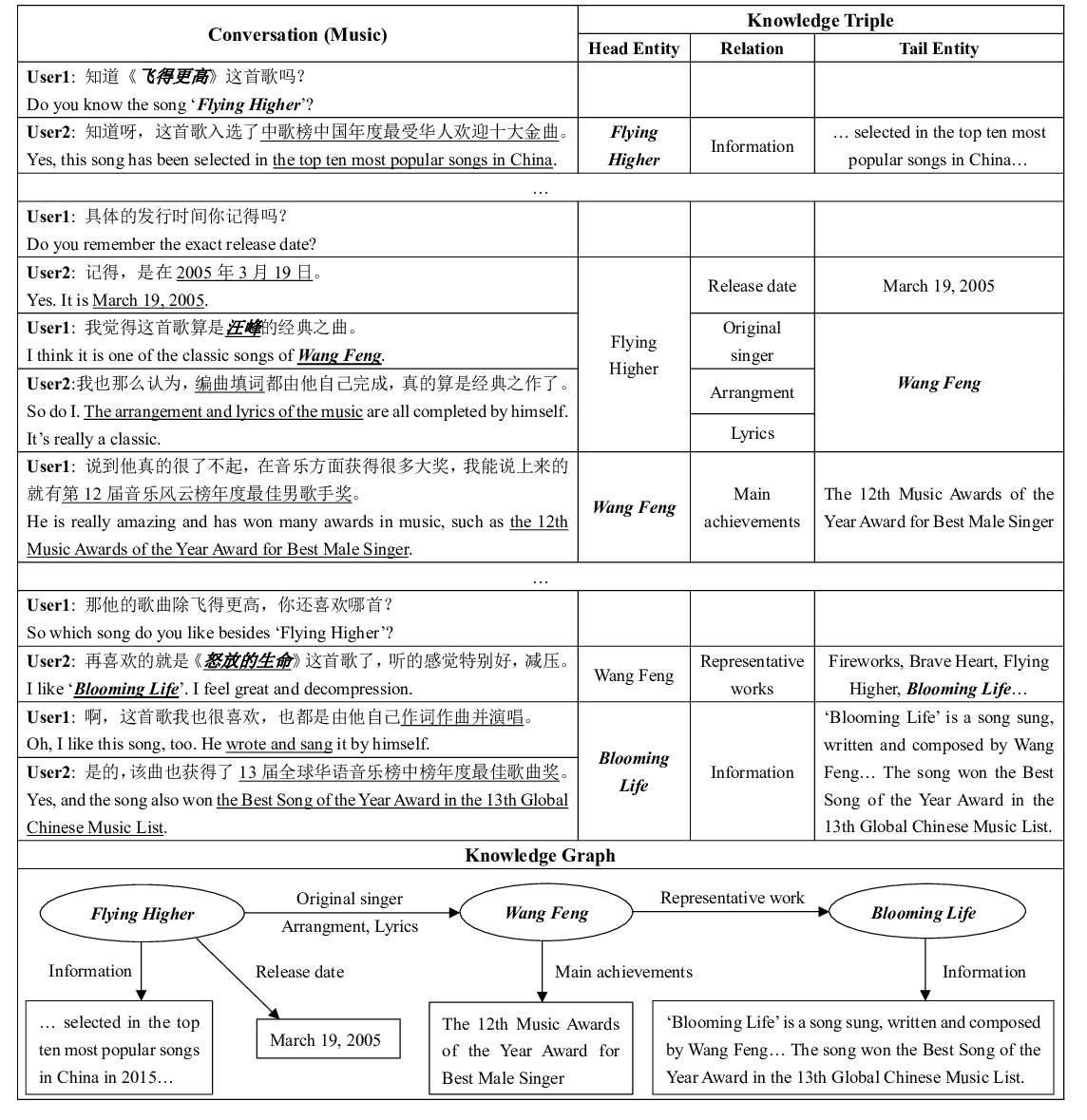
KdConv: A Chinese Multi-domain Dialogue Dataset Towards Multi-turn Knowledge-driven Conversation
Hao Zhou, Chujie Zheng, Kaili Huang, Minlie Huang, Xiaoyan Zhu,
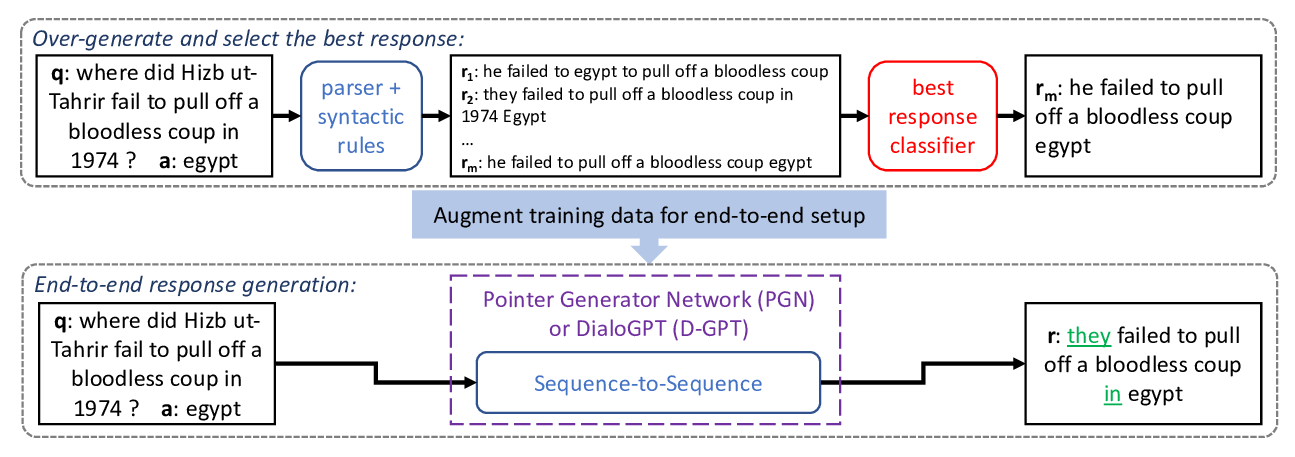
Fluent Response Generation for Conversational Question Answering
Ashutosh Baheti, Alan Ritter, Kevin Small,